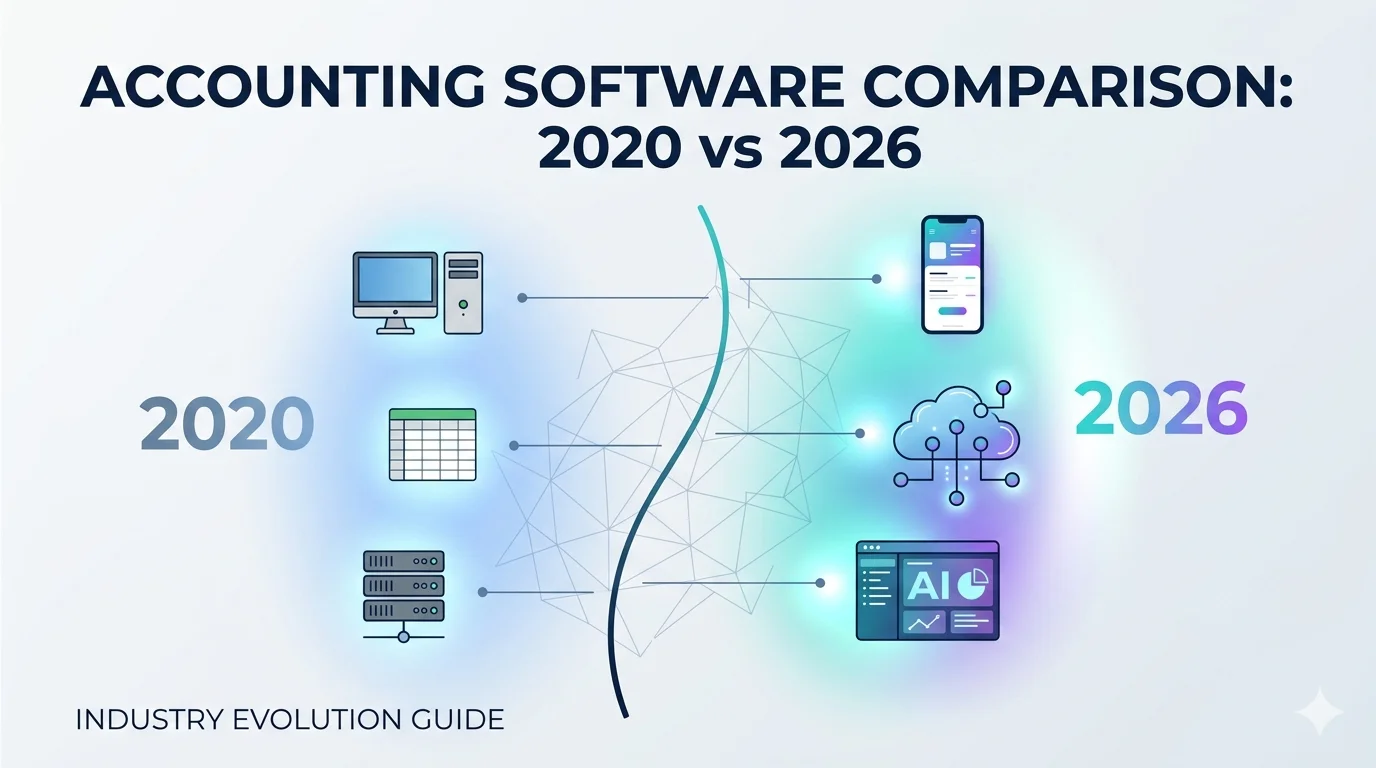
The accounting software industry has changed dramatically between 2020 and 2026. What started as simple digital bookkeeping tools has now evolved into cloud-based financial ecosystems powered by automation, artificial intelligence, real-time data syncing, and deep business integrations.
In 2020, most accounting software focused on basic tasks like invoicing, expense tracking, and manual reconciliation. By 2026, these same platforms have transformed into intelligent financial management systems that reduce manual work and provide real-time financial insights for decision-making.
This article compares how accounting software in general has evolved from 2020 to 2026, focusing on major platforms like QuickBooks, Xero, FreshBooks, Zoho Books, and similar cloud accounting tools.
Overview: 2020 vs 2026 Accounting Software Landscape
Accounting Software in 2020
In 2020, accounting tools were mainly focused on:
- Basic bookkeeping and ledger entries
- Manual or semi-automated bank reconciliation
- Simple invoicing systems
- Desktop-heavy workflows still common
- Limited AI or automation features
- Basic cloud adoption (early stage)
At this time, businesses still relied heavily on manual data entry and accountants played a major role in routine bookkeeping tasks.
Accounting Software in 2026
By 2026, accounting software has become much more advanced and cloud-driven:
- AI-powered automation for categorization and reconciliation
- Real-time financial dashboards
- Full cloud-first ecosystems
- Mobile-first financial management
- Advanced integrations with banking, payroll, and CRM systems
- Strong automation in invoicing, expenses, and reporting
Modern accounting systems now act as complete financial control centers for businesses.
Feature Comparison: 2020 vs 2026
1. Invoicing Systems
2020 Invoicing Features
- Manual invoice creation
- Basic templates with limited customization
- No real-time tracking in many systems
- Payment reminders often manual
- Limited online payment integration
Invoicing was functional but not deeply automated.
2026 Invoicing Features
- Fully automated invoice generation
- Smart recurring invoices
- Real-time invoice status tracking (sent, viewed, paid)
- Integrated payment gateways
- Automated reminders and follow-ups
- Client portals for invoice viewing
In 2026, invoicing is directly connected to cash flow forecasting and financial reporting.
2. Expense Tracking
2020 Expense Tracking
- Manual expense entry
- Receipt uploads with limited automation
- Basic categorization
- Bank imports often delayed or manual
2026 Expense Tracking
- AI-based expense categorization
- Instant receipt scanning using mobile apps
- Real-time bank feed synchronization
- Automated expense matching with transactions
- Smart rules for recurring expenses
Expense tracking has shifted from manual bookkeeping to automated financial data capture.
3. Bank Reconciliation
2020 Reconciliation
- Manual matching of transactions
- Rule-based suggestions in early stages
- Limited automation
- Time-consuming processes
2026 Reconciliation
- AI-driven transaction matching
- Real-time bank feed updates
- Smart learning algorithms
- Automated reconciliation rules
- Near-instant matching accuracy
Reconciliation is now one of the most automated parts of accounting software.
4. Reporting and Analytics
2020 Reporting
- Basic profit and loss statements
- Static balance sheets
- Limited customization
- No predictive insights
2026 Reporting
- Real-time financial dashboards
- AI-powered cash flow forecasting
- Multi-dimensional reporting views
- Custom business analytics
- Predictive financial modeling
Reports are no longer just historical records; they now help businesses make future decisions.
5. Time Tracking and Project Management
2020
- Basic or no built-in time tracking in most systems
- Heavy reliance on third-party tools
- Limited project profitability tracking
2026
- Built-in time tracking in freelancer-focused tools like FreshBooks
- Direct conversion of tracked hours into invoices
- Project profitability analytics
- Integration with workflow tools
Time tracking is now tightly connected to billing systems.
6. Integrations and Ecosystem
2020
- Limited integration libraries
- Basic API connections
- Few automation workflows
2026
- Massive integration ecosystems
- Full API-based automation systems
- Connections with banking, CRM, payroll, e-commerce
- AI-powered workflow automation between apps
Accounting software has become part of larger business ecosystems.
7. Artificial Intelligence and Automation
2020
- Minimal AI usage
- Mostly rule-based automation
- Manual corrections still required
2026
- AI-powered transaction categorization
- Smart reconciliation suggestions
- Predictive cash flow analysis
- Automated financial insights
- Continuous learning systems based on user behavior
AI is now a core part of accounting workflows.
8. Ease of Use
2020
- More complex interfaces
- Desktop-heavy workflows
- Required accounting knowledge
2026
- Mobile-first design
- Simplified dashboards
- Beginner-friendly interfaces in tools like FreshBooks
- Automation reduces manual complexity
Software has become significantly easier to use for non-accountants.
9. Cloud Adoption
2020
- Partial cloud adoption
- Hybrid desktop + cloud systems
- Limited mobile functionality
2026
- Fully cloud-native systems
- Real-time synchronization across devices
- Strong mobile applications
- Remote collaboration as standard
Cloud computing is now the foundation of all accounting platforms.
Platform Positioning in 2020 vs 2026
Xero Evolution
- 2020: Cloud accounting alternative to desktop software
- 2026: Full financial ecosystem with automation and AI-driven workflows
QuickBooks Evolution
- 2020: Industry-leading accounting software with strong desktop roots
- 2026: Advanced cloud accounting platform with enterprise-grade features
FreshBooks Evolution
- 2020: Simple invoicing and freelancer tool
- 2026: Polished billing and client management system focused on service businesses
Key Industry Shift Summary
Between 2020 and 2026, accounting software has shifted in several major ways:
- From manual bookkeeping → automated financial systems
- From desktop software → cloud-first platforms
- From static reports → real-time analytics
- From basic invoicing → intelligent cash flow systems
- From standalone tools → integrated ecosystems
- From accountant-heavy workflows → user-friendly automation
Final Thoughts
The evolution from 2020 to 2026 shows a clear direction: accounting software is no longer just about recording transactions.
It has become a fully automated financial intelligence system that helps businesses:
- Save time
- Reduce human error
- Improve cash flow visibility
- Make smarter financial decisions
Tools like Xero, QuickBooks, and FreshBooks have all evolved, but in different directions depending on their target users. Xero focuses on scalability and automation, QuickBooks on advanced accounting power, and FreshBooks on simplicity and client-based workflows.
For modern businesses, choosing accounting software is no longer just about bookkeeping. It is about choosing a financial system that can grow with your business in an increasingly automated world.