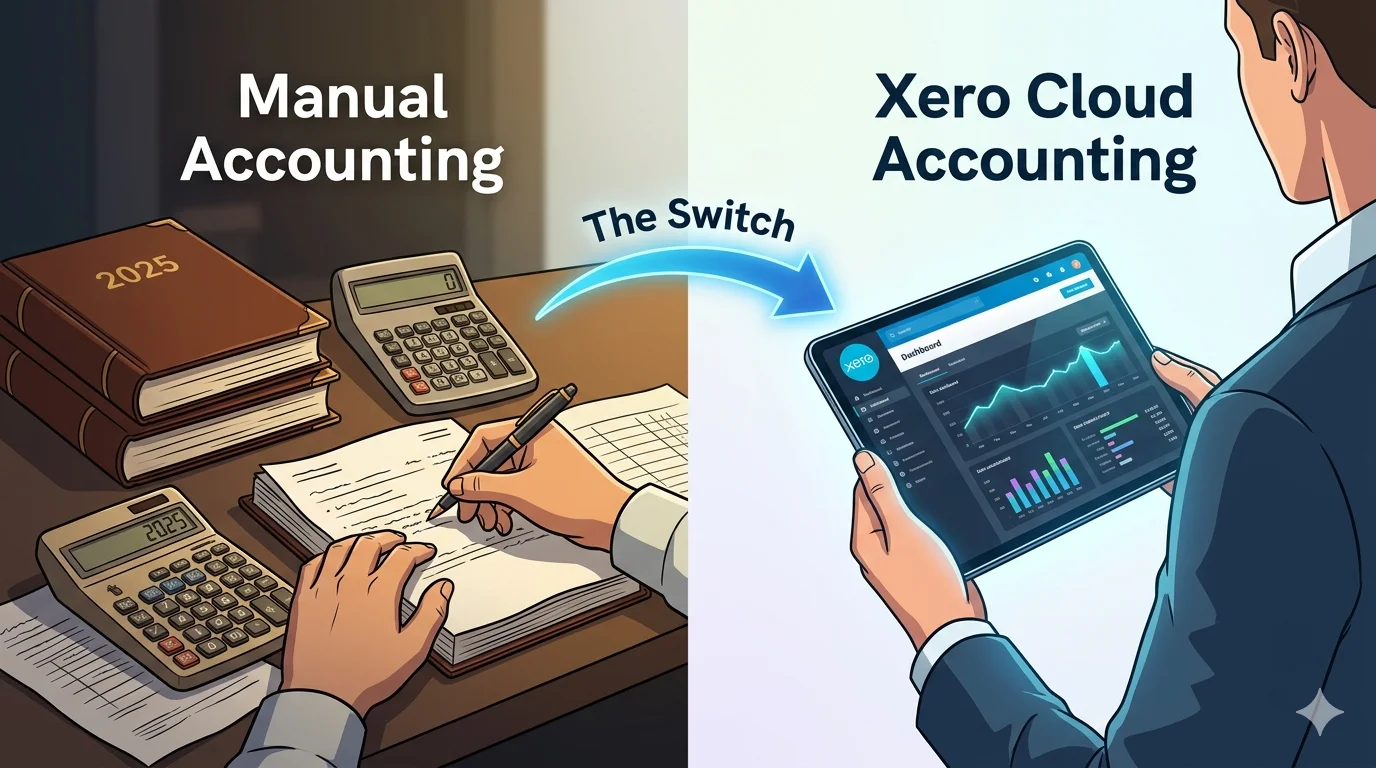
In 2026, businesses are rapidly moving away from manual bookkeeping methods and adopting modern accounting software. Traditional spreadsheets and paper-based systems are no longer efficient enough to handle the speed, complexity, and accuracy required in today’s business environment.
One of the most popular solutions leading this shift is Xero, a cloud-based platform that automates financial management and provides real-time insights.
This article explains the key differences between Xero and manual accounting, and why so many businesses are making the switch.
What is Manual Accounting?
Manual accounting refers to the traditional method of recording financial transactions using:
- Paper ledgers
- Spreadsheets like Excel
- Handwritten records
In this system, business owners or accountants manually enter every transaction, calculate totals, and prepare financial reports.
While this method was once standard, it has several limitations in the modern business world.
What is Xero Accounting Software?
Xero is a cloud-based accounting platform designed to automate and simplify financial management.
Instead of manually recording data, Xero allows businesses to:
- Automatically track income and expenses
- Generate financial reports instantly
- Reconcile bank transactions
- Manage invoices and billing digitally
Everything is stored securely in the cloud and accessible from anywhere.
Key Differences Between Xero and Manual Accounting
Understanding the differences helps explain why businesses are switching.
1. Speed and Efficiency
Manual accounting requires significant time for data entry and calculations.
With Xero:
- Transactions are automated
- Reports are generated instantly
- Bank feeds update automatically
This saves hours of manual work every week.
2. Accuracy and Error Reduction
Manual systems are highly prone to human error such as:
- Incorrect entries
- Miscalculations
- Missing transactions
Xero reduces these risks through automation and validation, improving overall accuracy.
3. Accessibility and Flexibility
Manual accounting is usually tied to physical records or a single device.
Xero, on the other hand:
- Works entirely online
- Can be accessed from any device
- Supports remote teams
This makes it ideal for modern businesses with flexible work environments.
4. Real-Time Financial Insights
With manual accounting, financial reports are often outdated by the time they are prepared.
Xero provides:
- Real-time dashboards
- Live cash flow tracking
- Instant profit and loss updates
This allows business owners to make faster and better decisions.
5. Automation of Routine Tasks
Manual accounting requires repetitive tasks such as:
- Data entry
- Invoice creation
- Reconciliation
Xero automates these processes, freeing up time for more important business activities.
Why Businesses Are Switching to Software in 2026
The shift from manual accounting to software is driven by several key factors.
Increased Business Complexity
Modern businesses deal with more transactions, customers, and financial data than ever before. Manual systems cannot keep up with this complexity.
Demand for Real-Time Data
In 2026, decisions need to be made quickly. Businesses cannot afford to wait days or weeks for financial reports.
Remote Work and Digital Operations
With teams working remotely, cloud-based tools like Xero make collaboration and access much easier.
Cost and Time Efficiency
While manual accounting may seem cheaper, it actually costs more in terms of:
- Time spent
- Human effort
- Error correction
Software reduces these hidden costs significantly.
Advantages of Switching to Xero
Businesses moving to Xero experience several benefits:
- Faster financial processes
- Reduced manual workload
- Better financial visibility
- Improved decision-making
- Scalable system for growth
These advantages make it a strong choice for startups, freelancers, and growing companies.
Is Manual Accounting Still Useful?
Manual accounting is not completely obsolete. It can still be useful for:
- Very small businesses with minimal transactions
- Individuals managing simple finances
- Temporary or backup record keeping
However, as soon as a business starts growing, manual systems quickly become inefficient.
Challenges of Switching to Software
While accounting software offers many benefits, switching from manual systems can come with challenges:
- Learning curve for new users
- Data migration from old systems
- Initial setup time
- Subscription costs
However, these challenges are usually short-term compared to long-term benefits.
How to Transition from Manual Accounting to Xero
If you are planning to switch, follow these steps:
- Evaluate your current accounting process
- Choose the right software based on your needs
- Import existing financial data
- Train your team on the new system
- Gradually phase out manual processes
This ensures a smooth transition without disrupting business operations.
Final Thoughts
The difference between manual accounting and modern software is significant. In 2026, businesses need speed, accuracy, and flexibility—something manual systems cannot consistently provide.
This is why platforms like Xero are becoming the preferred choice for businesses worldwide.
While manual accounting still has limited use cases, the future clearly belongs to cloud-based accounting software that automates processes and provides real-time financial insights.
Switching to accounting software is no longer just an upgrade—it is a necessity for staying competitive in today’s business environment.